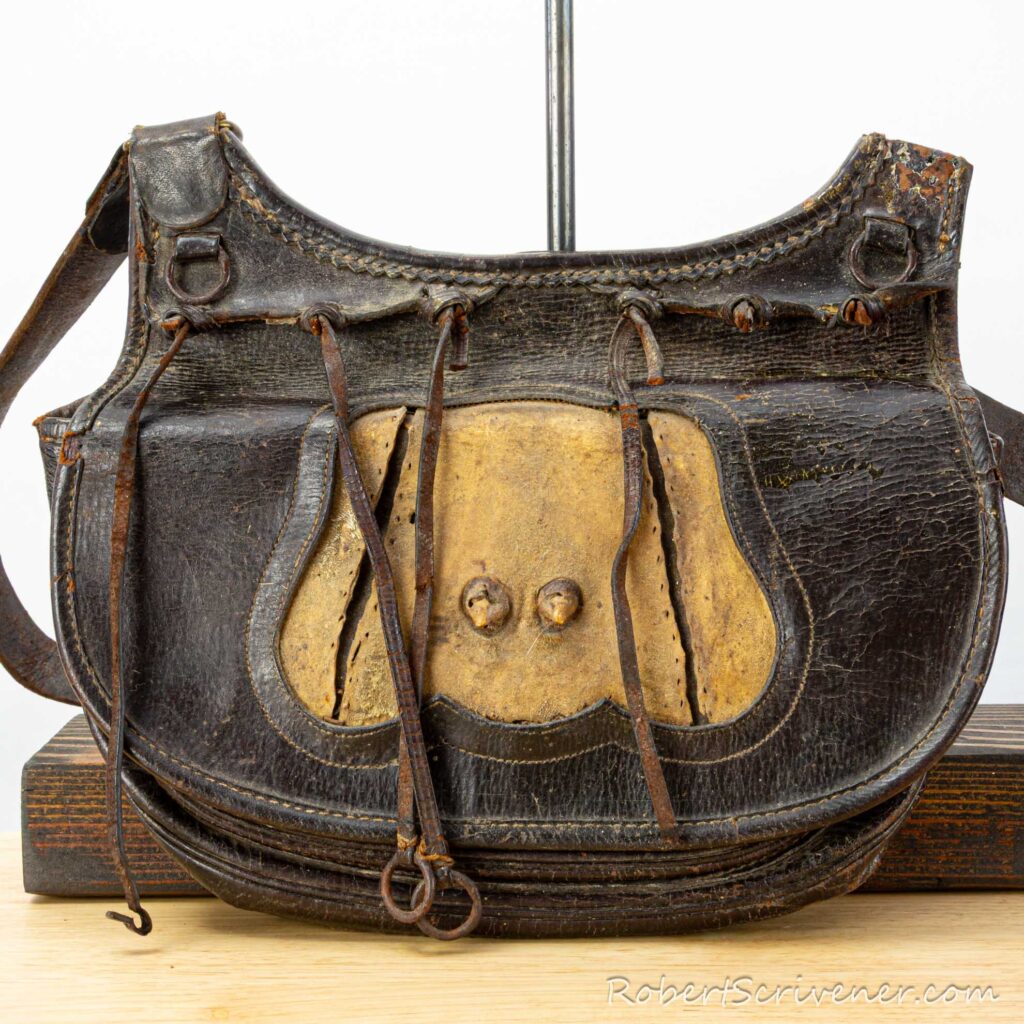
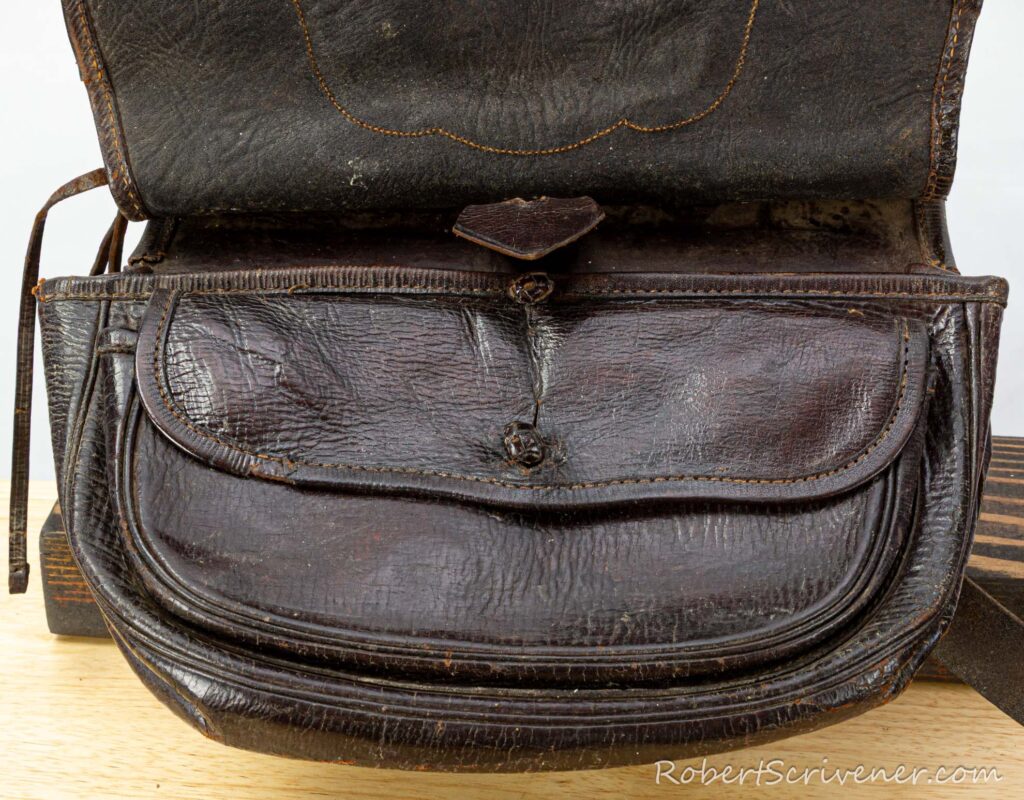
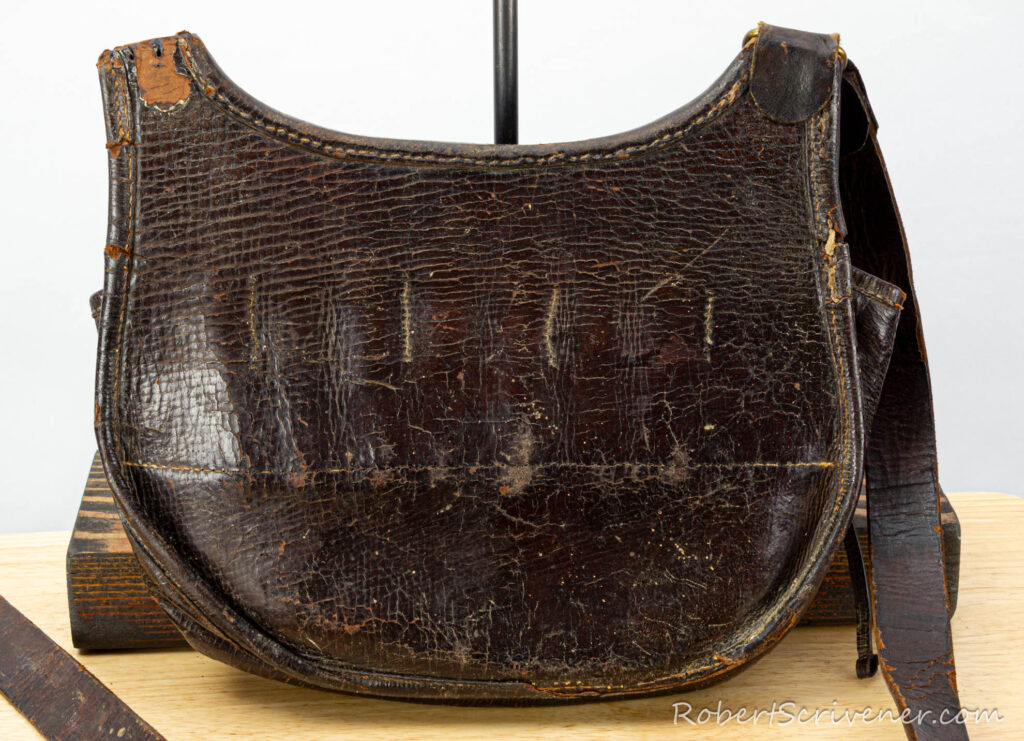
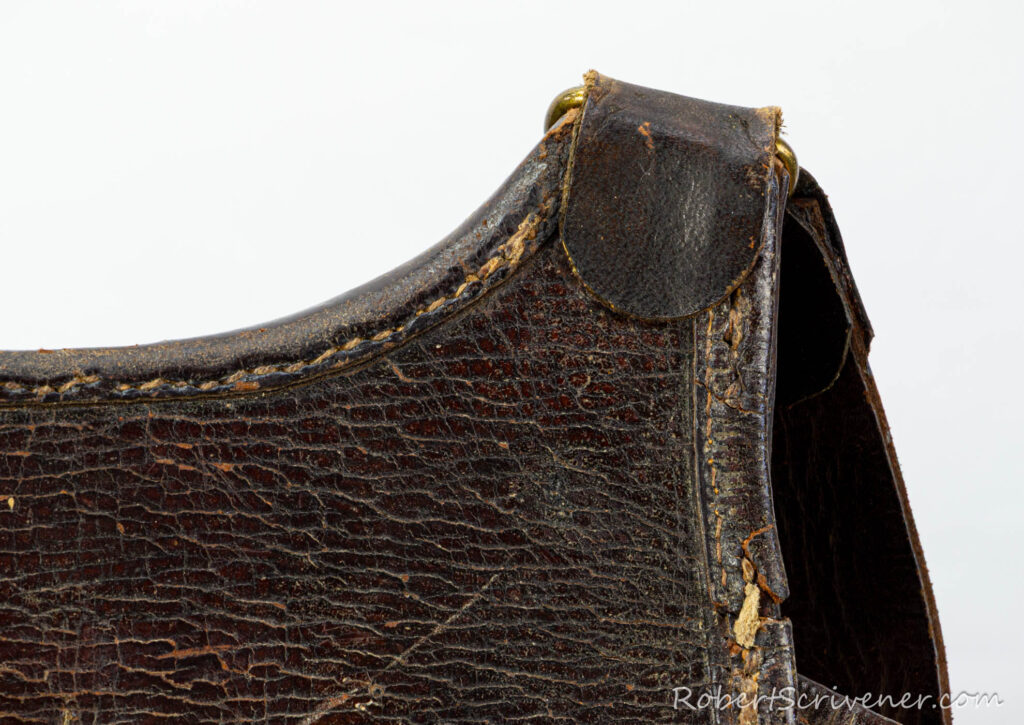
At a recent show in Lexington, Kentucky, a good friend handed me something that felt like a direct link to a different era: a late 1800s game bag. At first glance it didn’t look like the oversized, heavily compartmentalized game bags often pictured in period catalogs. This one was modest, purposeful, and beautifully restrained — a personal, usable object rather than an ornate status piece.
What I found
- Size: surprisingly compact at 9″ wide x 7″ tall — easily handheld, engineered for function and mobility rather than display.
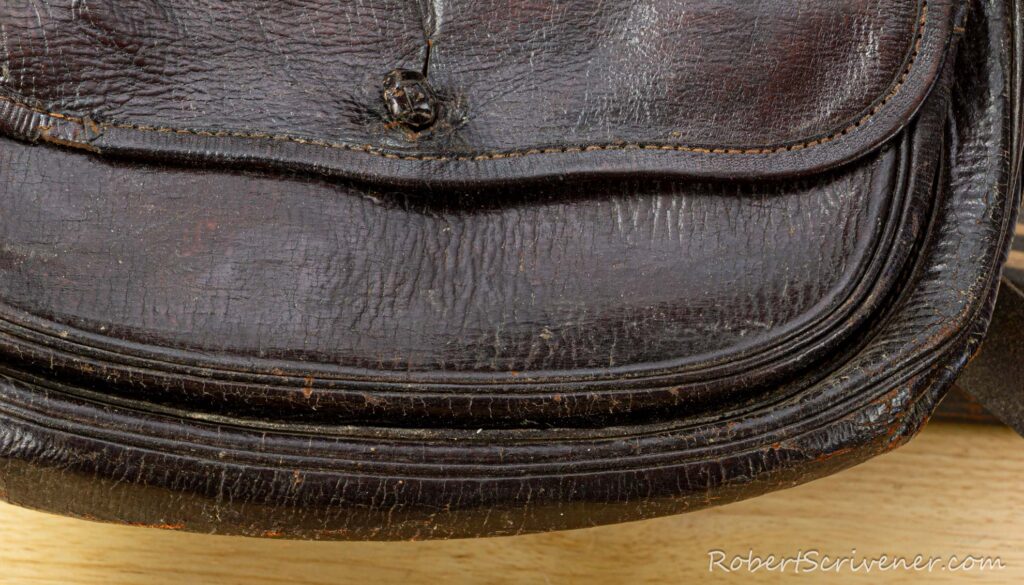
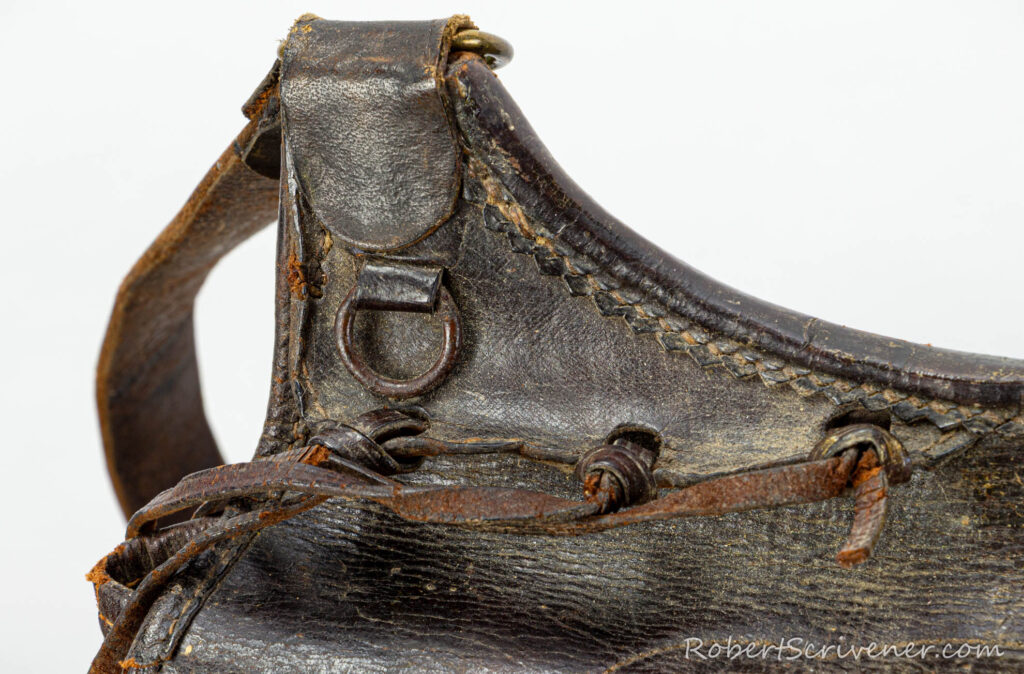
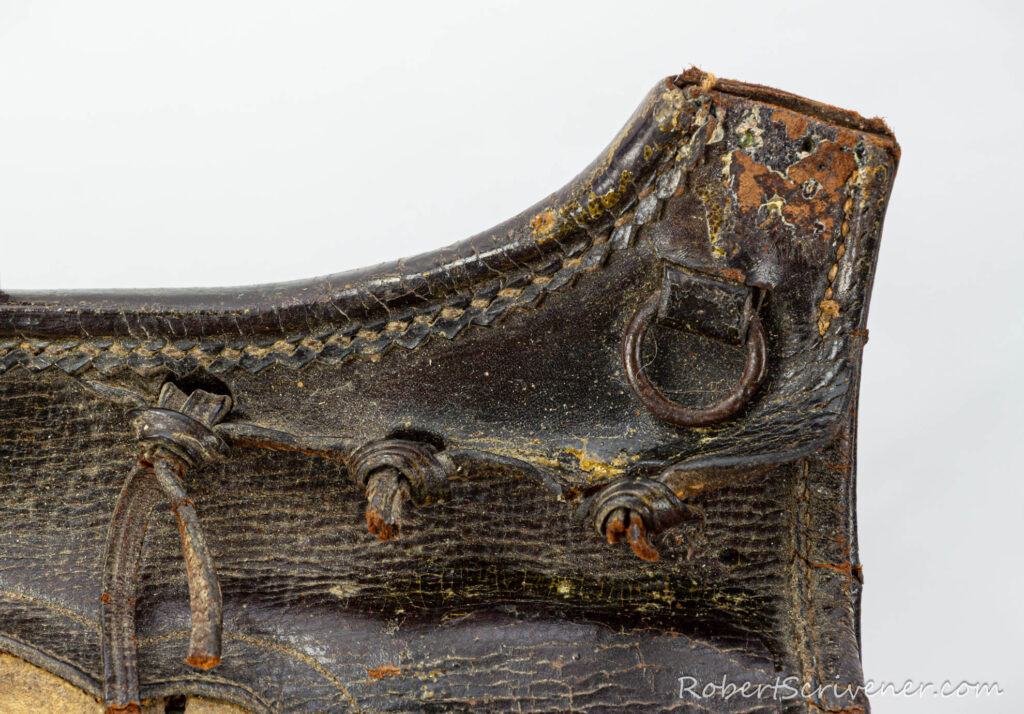
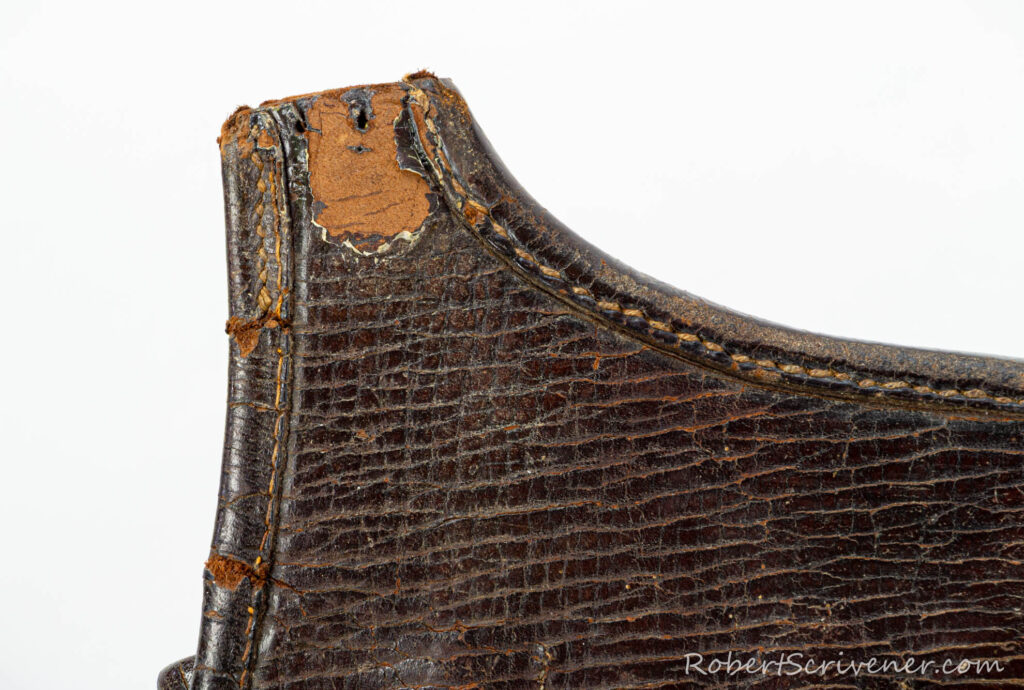
- Materials & construction: cowhide body with a simple leather flap. The stitching and wear show honest use rather than decorative excess.
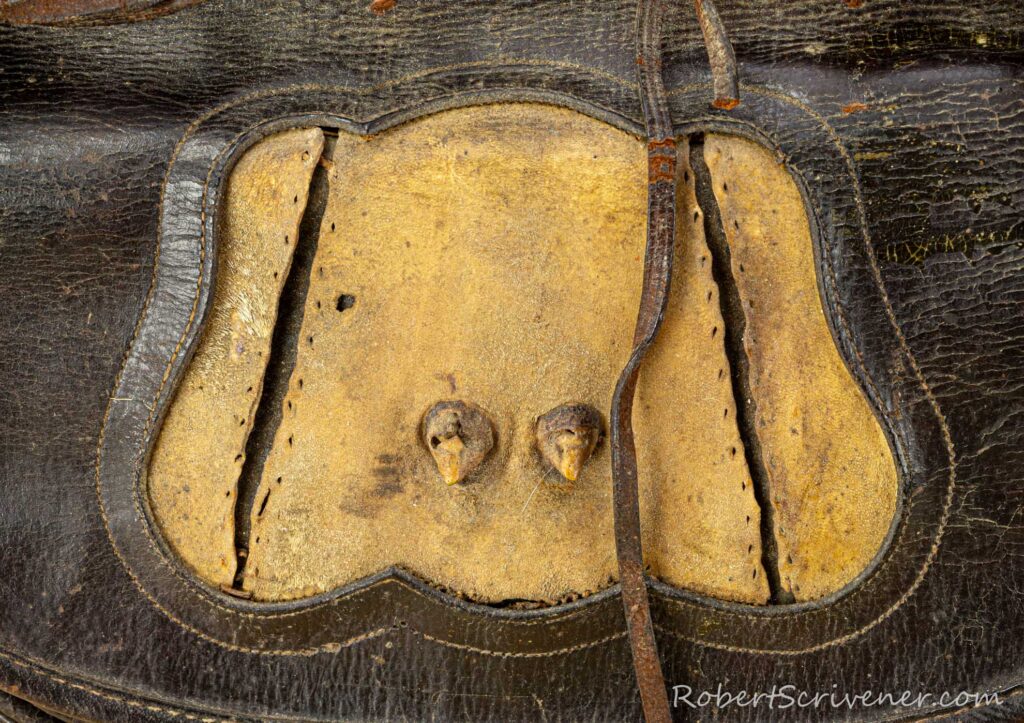
- Decorative detail: the flap features a cutout inlaid with deer dewclaws — a rustic, tactile decorative choice that ties the bag directly to hunting culture and the materials of the field.
- Dating clues: tucked inside the bag were two shotgun shells that, based on construction and patina, likely date from about 1875–1900. Those remnants make a strong case for placing the bag in the late 19th century.
Why this piece matters Most surviving game bags we see in museums or collections are larger, more elaborate items — often designed for wealthy sportsmen and decorated to display craftsmanship. A smaller, utilitarian bag like this speaks to everyday use: someone who hunted regularly, traveled light, and favored durability. The inclusion of deer dewclaws as ornamentation is a particularly evocative touch; it bridges the practical with the personal, hinting that the maker or owner valued the symbolism of the hunt as much as the bag’s function.
Probable uses and owner profile Given its size and straightforward design, this bag was likely used for small game, cartridges, or field essentials (wiping cloth, small tools, or even personal items). The owner may have been a working farmer, guide, or an active field hunter who needed something compact for day use. The preserved cartridges suggest it might have been a pocket for live or spent shells, or simply a place where things were stashed and forgotten.